OBI Gives Incident Response the Request Context It Needs
When incidents are active, traces usually tell you that something is wrong. The harder problem is figuring out who is affected and why, quickly.
OpenTelemetry eBPF Instrumentation (OBI) v0.7.0 adds HTTP header enrichment so spans can carry request context like tenant or user segment. That context is often exactly what helps you move from “error rate is up” to “this is isolated to one customer cohort”.
The best part: this is a config change on OBI itself. You do not need to rebuild or redeploy your existing applications.
Why this matters in practice
Most teams have felt this pain: traces show latency and failures, but not enough request context to narrow scope during triage. Header enrichment closes that gap without requiring app code changes.
For this demo, we include:
x-tenant-idx-user-segment
And we intentionally obfuscate:
authorization
That gives responders useful debugging context while still masking sensitive values.
The config change
This is the core policy used in the demo:
ebpf:
  # Needed so headers are captured for enrichment.
  track_request_headers: true
  payload_extraction:
    http:
      enrichment:
        enabled: true
        policy:
          # Only emit headers that rules explicitly match.
          default_action: exclude
          # Replacement value for obfuscated headers.
          obfuscation_string: '***'
        rules:
          - action: include
            type: headers
            scope: all
            match:
              patterns: ['x-tenant-id', 'x-user-segment']
              case_sensitive: false
          - action: obfuscate
            type: headers
            scope: all
            match:
              patterns: ['authorization']
              case_sensitive: false
Two small details are worth calling out: scope: all applies rules to both
request and response headers, and case_sensitive: false avoids missing headers
because of casing differences.
Turning this feature on or off is a simple OBI config update and OBI redeploy. No application rebuild required.
Visual walkthrough
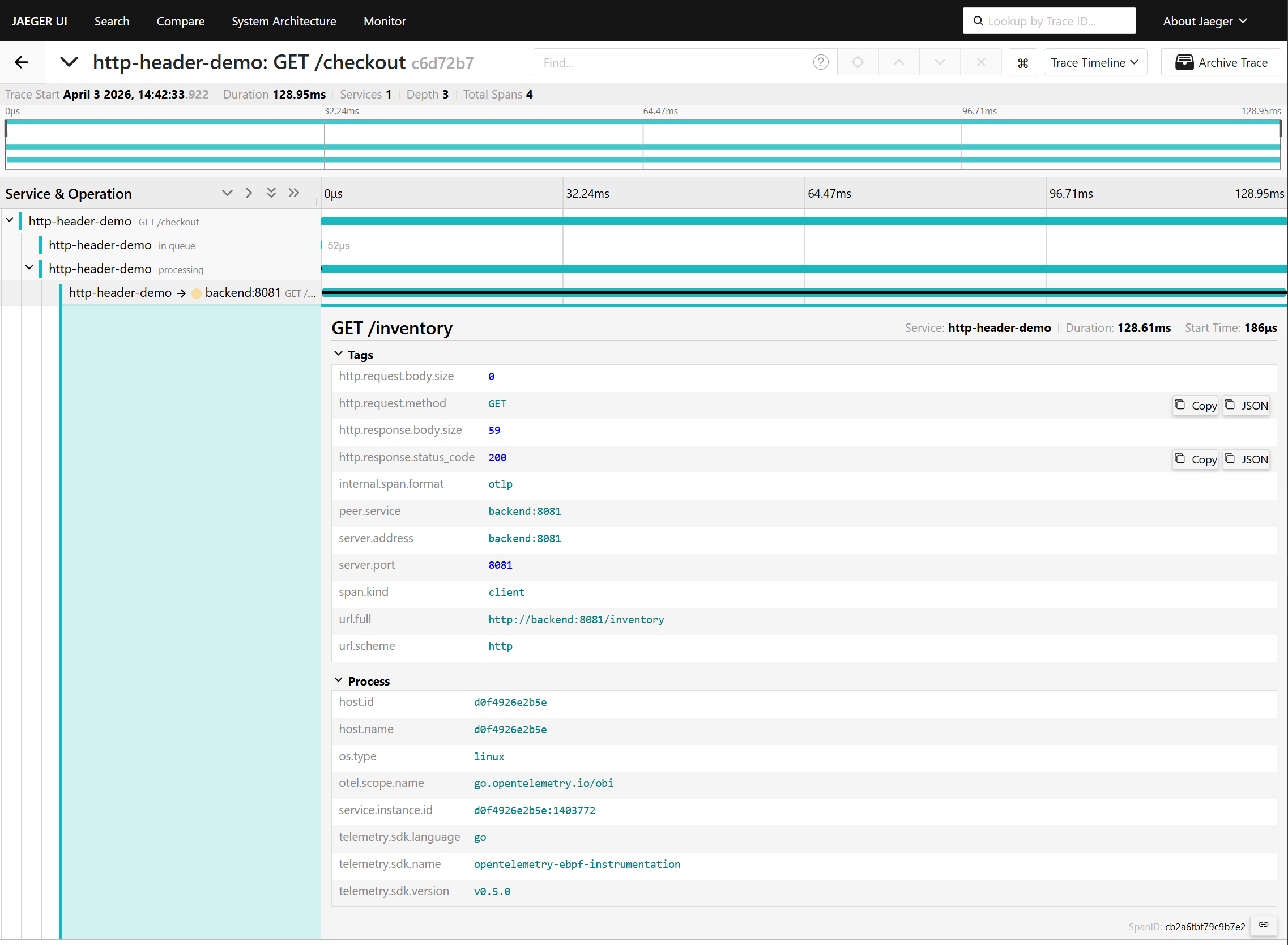
Baseline trace (before enrichment): no header attributes in the span.
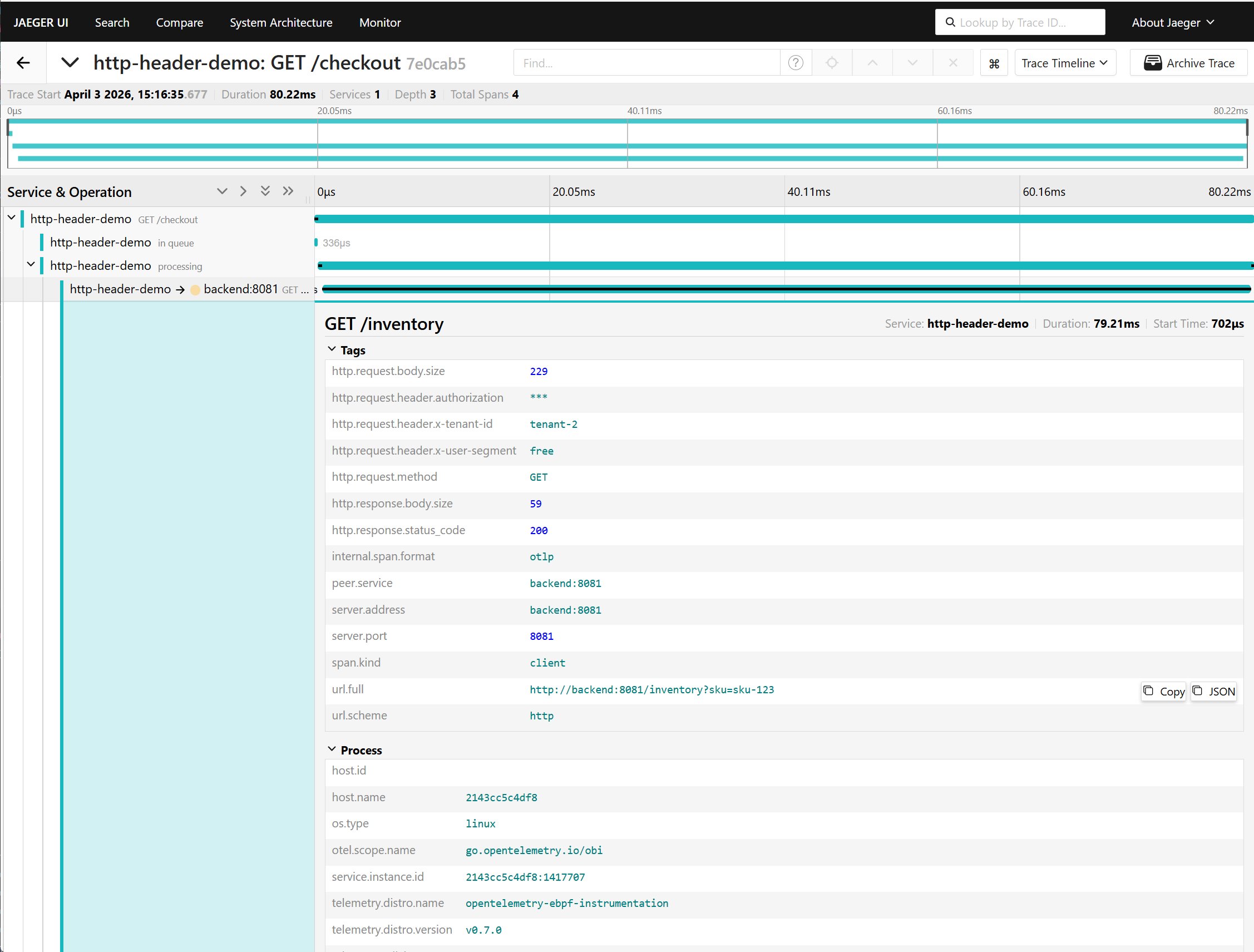
After enabling enrichment in OBI v0.7.0: the span now includes request header context.
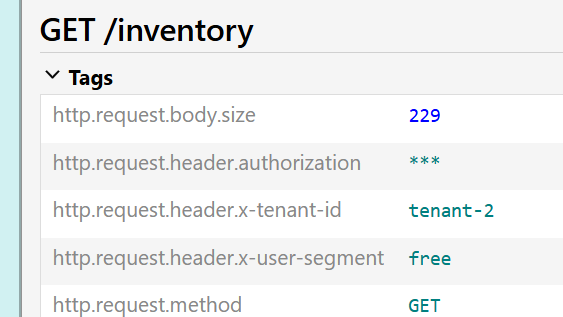
Note, now authorization is present but masked, while x-tenant-id and
x-user-segment stay visible.
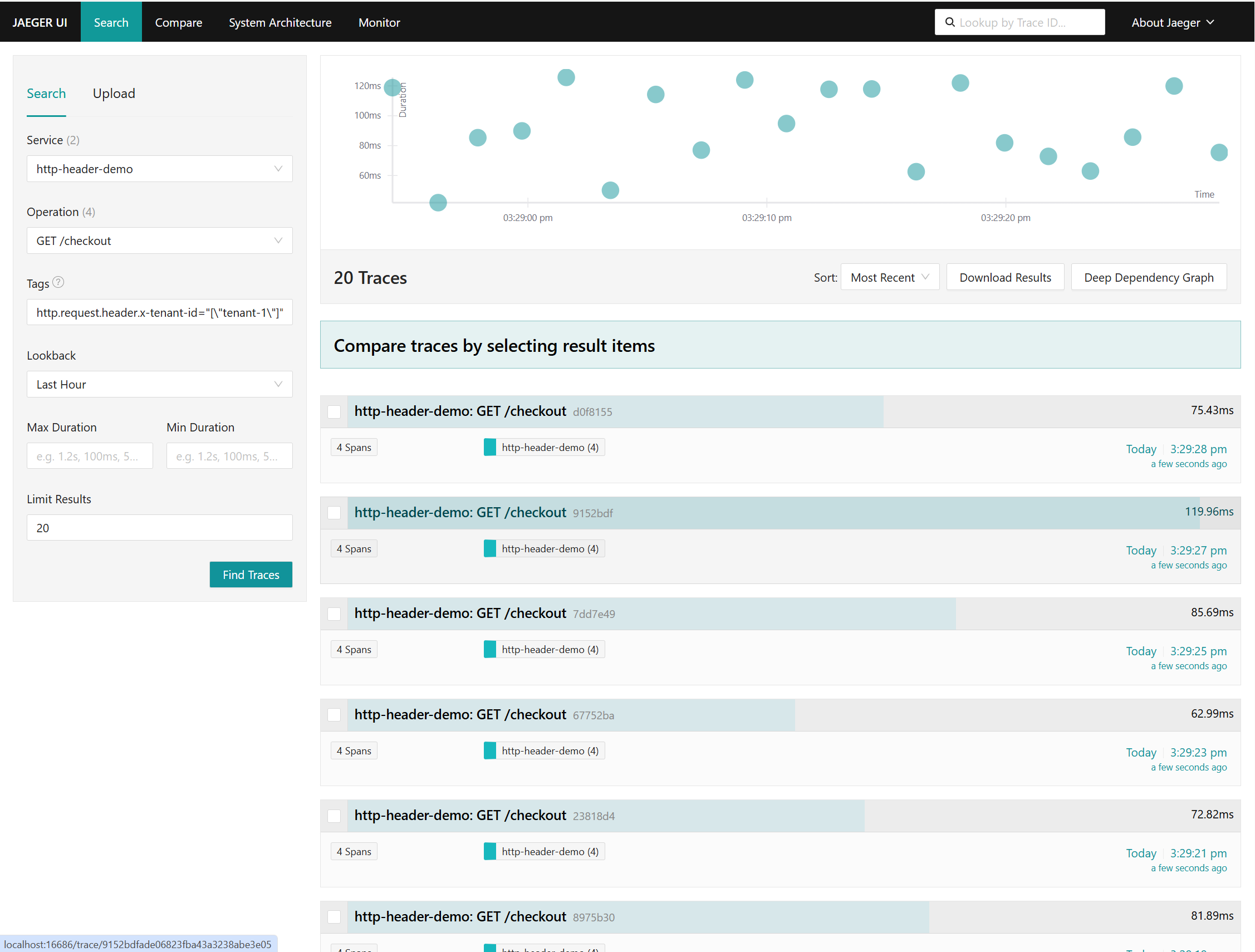
Traces can now be filtered by enriched attributes (for example
http.request.header.x-tenant-id) to focus on the impacted cohort.
Takeaway
OBI v0.7.0 header enrichment is a practical debugging feature: it improves incident response signal, keeps policy explicit, and can be rolled out (or rolled back) by changing OBI configuration only.
Already running OBI? Upgrade to v0.7.0 and give header enrichment a try.
New to OBI? Start with the demo used in this post to see an end-to-end example of how it works. Then be sure to check out how to start using OBI for your application.
Have you already tried header enrichment? Let us know how it went. Find us on
the
#otel-ebpf-instrumentation CNCF Slack channel,
or
open a discussion
if you have feedback that could help shape future releases.