New Configuration Schema release candidate
The latest release of the OpenTelemetry Configuration Schema is out this week. It brings the Configuration working group one step closer to completion after 3 years of effort, and the schema one step closer to being marked stable. We might be optimists here, but we think this may be the last release candidate before a stable release is done.
Many of the changes in the repositories since the previous release involved improvements to the tooling, to make the schema more consistent, and reduce the chances for new inconsistencies to be introduced in the future. There are other changes impacting both end users, contributors to the configuration schema, and implementers of the schema.
End user changes
The release notes include information about all the breaking changes. A
noticeable one includes the grouping of tls configuration under the various
OTLP exporters, and the renaming of the options it contains to more closely
align with the OpenTelemetry Collector’s configtls package.
# Before
tracer_provider: # or meter_provider, logger_provider
  processors:
    - batch:
        exporter:
          otlp_http:
            certificate_file: /app/cert.pem
            client_key_file: /app/key.pem
            client_certificate_file: /app/client_cert.pem
---
# After
tracer_provider:
  processors:
    - batch:
        exporter:
          otlp_http:
            tls:
              ca_file: /app/cert.pem
              key_file: /app/key.pem
              cert_file: /app/client_cert.pem
The log_level used to be a string value, to match the existing specification
for OTEL_LOG_LEVEL. In this release, it has been changed to support the same
severity levels already defined in the logging specification.
Earlier this month, an announcement about the deprecation of the Zipkin exporter
was made. As a result, this new release of the schema has also removed the
exporter. The validation around various properties has also been improved.
Lastly the schema now populates the description field for all properties,
giving users some much needed context when editing configuration files.
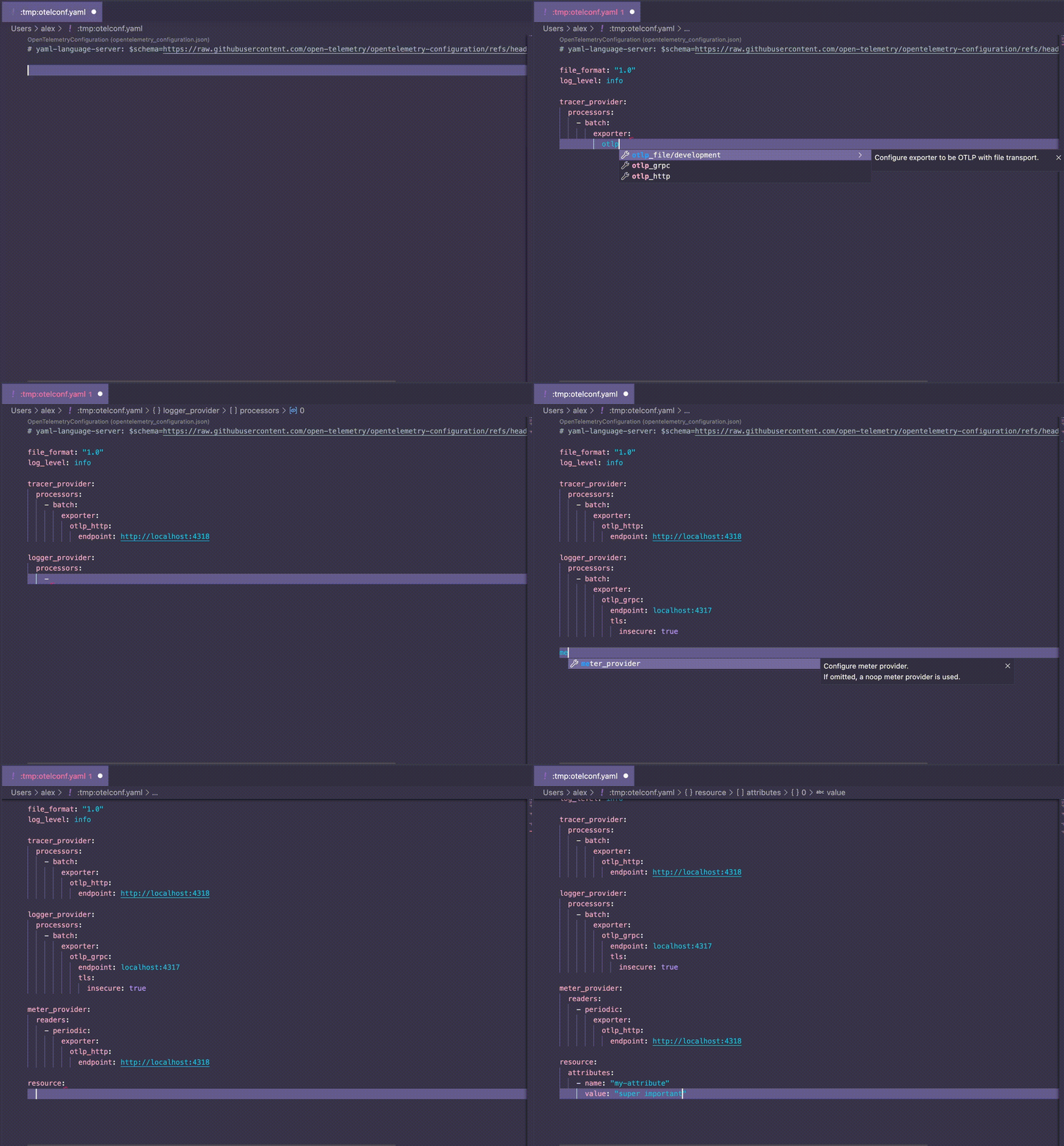
Screen capture of using the schema from an editor demonstrating the usage of description fields
The description field makes it easier for end users to understand the details of the configuration they’re editing, and can also help language implementations. Many implementations use code generation tools to automatically produce the in-code representation of the configuration schema. In the tools that support it, the description field automatically produces documentation for the properties of the model.
Contributors
Earlier releases of the JSON schema were split into multiple files under the schema directory. This has changed in this release candidate. That directory now contains the YAML source files used to generate the single file stored in the root of the repository. The new format for source files is combined with tooling in the repository to generate the documentation, examples, and the resulting JSON schema more consistently. For anyone looking to contribute, read more details about the tooling and the process in the contributing documentation.
Experimental features
As you look through the schema or some of the example files, you may find
yourself asking why there are configuration options denoted with a development
suffix. As with many areas of OpenTelemetry, the Configuration Schema will
continue to evolve as the specification stabilizes. The mechanism used to
identify experimental features in the schema is the suffix
*/(development|alpha|beta). This is documented in the versioning
documentation. Users of experimental features should be aware
that the options available in experimental sections of the configuration may
change.
Not sure where to start? Head over to the schema’s documentation page to learn more about all the configuration options available. We’d love to hear your feedback on this latest version of the schema!